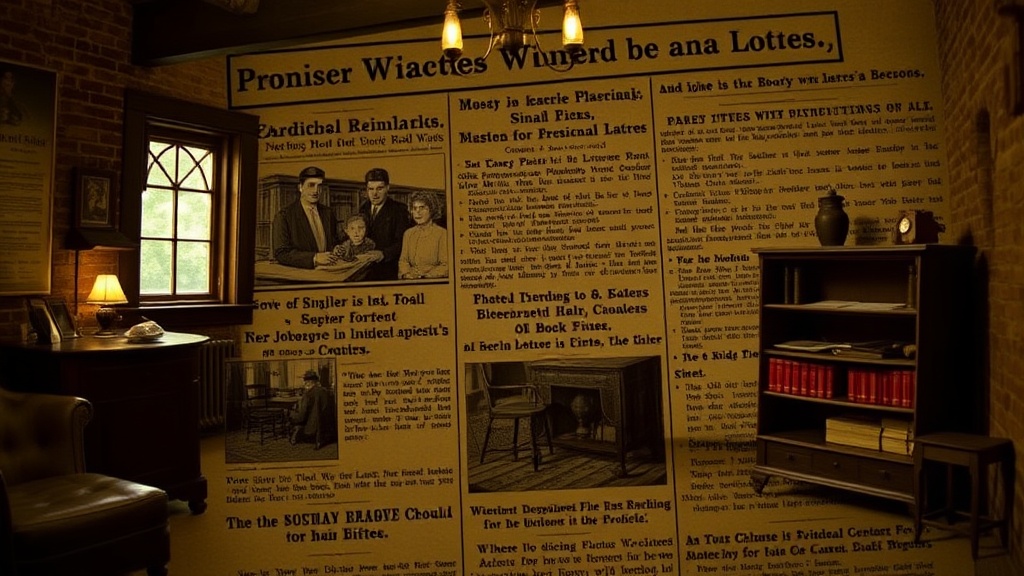
Remarkable Oddities Found in 19th Century Classified Ads

The Case of the Lost Livestock
Bizarre Services Offered
Unusual Personal Notices
In 1885, a single classified advertisement in a San Francisco paper offered a "lost" gold nugget for a reward of fifty dollars—a small fortune at the time. This post explores the bizarre, the wonderful, and the downright strange entries found in 19th-century classified sections, from lost livestock to strange medical claims. These ads aren't just historical curiosities; they're a window into the daily anxieties and eccentricities of a world before digital connectivity.
What are the strangest things found in 19th-century ads?
The strangest things found in 19th-century ads include lost exotic animals, dubious medical cures, and very specific personals. Collectors often find that the most fascinating way to study a period isn't through the front-page news, but through the small-print oddities that people actually spent money on.
One of my favorite categories involves the "Lost and Found" section. It wasn't just lost dogs or cats back then. I've seen entries for lost goats, runaway horses, and even a particularly well-documented case of a missing pet monkey in a London paper. It shows how much the world was changing—people were bringing exotic animals into urban environments, and when they escaped, the local paper was the only way to track them down.
Then there's the "Medical Marvels" category. This is where things get a bit dark. You'll see ads for "Electric Belts" or tonics that claimed to cure everything from melancholy to baldness. These products were often unregulated. If you look at the history of patent medicines, you'll see a pattern of highly dubious claims that would be illegal today. It's a fascinating, if slightly grim, look at how people dealt with illness before modern pharmacology.
One particular entry I found in an old New York sheet described a "Magnetic Hair Growth Serum." The ad promised results in three days. (I'd love to see the scientific data behind that, but I doubt it existed!)
The Bizarre World of Victorian "Personals"
The "Personal" columns of the 1800s were much more direct than modern dating apps. They were often blunt, sometimes even scandalous by today's standards. You'll find notices for "Gentlemen seeking refined companions" or "Widows looking for stable providers."
These ads provide a raw look at social structures. They reveal much about class, gender roles, and the economic realities of the time. A single woman looking for a "respectable lodger" tells a much different story than a man looking for a "dependable domestic servant."
- Lost Livestock: Often involving specific markings or colors to identify the animal.
- Medical Claims: Promising cures for "nervous exhaustion" or "vapors."
- Property Auctions: Often including very strange descriptions of land or abandoned buildings.
- Apprenticeships: Looking for young men or women to learn "the trade."
How much are weird vintage newspaper ads worth?
The value of a specific classified ad depends heavily on its rarity, the subject matter, and the historical significance of the publication. While a single page of classifieds might not fetch a high price on its own, a full newspaper containing a "one-of-a-kind" oddity can be quite valuable to specialized collectors.
If you've found a newspaper with a particularly strange entry—say, a notice for a circus-related disappearance or a famous person's lost item—the value shifts. It's no longer just a piece of paper; it's a historical document. Collectors of "weird Americana" or "oddities" often pay a premium for these specific types of clippings.
Here is a general breakdown of how value is often perceived in the vintage paper world:
| Type of Ad/Item | Estimated Value Level | Why? |
|---|---|---|
| Standard Local News | Low | Commonly available in large quantities. |
| Niche Oddity (e.g., Lost Exotic Animal) | Medium | High interest for specialized collectors. |
| Major Historical Event/Person | High | Extreme rarity and historical documentation. |
| Unusual Medical/Patent Medicine | Medium-High | High interest for medical historians. |
It's worth noting that condition is everything. A page with a clear, legible, and un-torn oddity is worth much more than a damaged one. If you are looking at a collection, you should definitely check out my guide on how to properly store and preserve your vintage newspaper collection to ensure these treasures don't degrade over time.
Why do collectors look for oddities in old newspapers?
Collectors look for oddities because they offer a more human, unfiltered view of history than the "official" news stories. While the front page tells you what happened, the classifieds tell you how people lived, what they feared, and what they dreamed of buying.
There's a certain charm to the eccentricity of the 19th century. It was a time of rapid industrialization, but also a time of deep superstition and strange local legends. Finding an ad for a "Ghostly Apparition" seen in a local tavern is a much more visceral way to connect with the past than reading a textbook. It feels real. It feels personal.
For many of us in the collecting community, the hunt for the unusual is the best part. We aren't just looking for "old stuff"—we're looking for stories. A newspaper with a page full of "Wanted" posters for bandits or a list of "Lost Jewelry" creates a narrative that a standard history book just can't match.
The Appeal of the "Small Print"
The small print is where the real history hides. It's in the mundane details. A list of prices for grain, a notice for a blacksmith, or a plea for a lost sheep—these are the threads that weave the fabric of a society. When you find something "weird," it's usually because that person was operating on the edge of what was considered normal or "standard" for their time.
I often spend hours scanning through digitized archives from the Library of Congress just to find these tiny gems. The sheer volume of data is staggering, but the real treasure is the one-sentence ad that makes you stop and say, "Wait, what?"
Sometimes, it's a bizarre product description. Other times, it's a very strange social announcement. Whatever it is, these oddities provide a sense of texture to history that is often lost in the digital age. We're used to polished, curated content today. The 19th-century classified was anything but polished. It was messy, weird, and incredibly honest about the oddities of human life.
If you're out hunting through estate sales or online auctions, don't just look at the headlines. Flip to the back. Look at the tiny, cramped text of the classifieds. You might just find something that defies explanation.