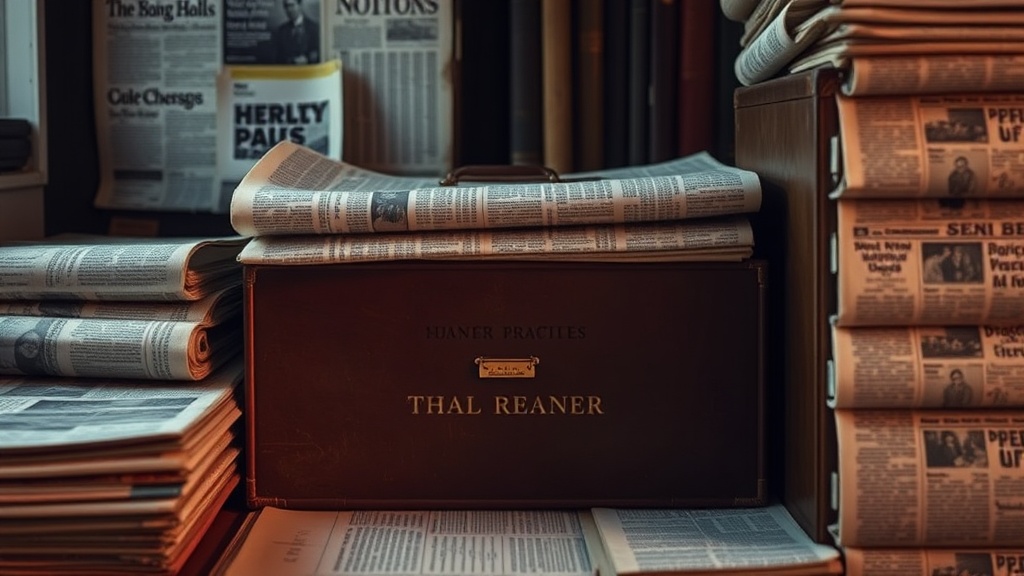
How to Properly Store and Preserve Your Vintage Newspaper Collection

Old newspapers aren't just paper—they're historical snapshots, moments frozen in time that deserve proper care. Whether you've inherited a stash of Life magazines from the 1940s or stumbled upon a Kennedy-era Chicago Tribune at an estate sale, this guide covers everything needed to keep these fragile artifacts intact for decades. The right storage methods prevent yellowing, brittleness, and the slow decay that claims most collections left in attics or basement corners.
What's the Best Way to Store Vintage Newspapers Without Damaging Them?
The best way to store vintage newspapers is in acid-free archival materials kept in a cool, dark, dry environment with stable temperature and humidity levels. Newspaper stock from the 19th and 20th centuries contains high acid content—that's why old newsprint turns yellow and crumbles so easily.
Start with acid-free archival folders or polyester sleeves rated for long-term storage. Gaylord Archival and University Products both offer museum-quality supplies specifically designed for paper preservation. Avoid standard manila folders or PVC plastic sleeves—they'll accelerate deterioration rather than prevent it.
Here are the storage priorities to keep in mind:
- Materials: Use acid-free boxes, tissue paper, and folders (pH 7.0 or higher)
- Environment: Maintain 65°F temperature and 35% relative humidity if possible
- Position: Store newspapers flat, never folded or rolled
- Protection: Keep away from direct light, pests, and pollutants
The catch? Most home environments fluctuate too much. Basements flood. Attics roast. Even closets near exterior walls experience temperature swings. If serious preservation matters, consider a dedicated storage unit with climate control—or at minimum, a climate monitoring system from vendors like SensorPush to track conditions.
Should You Laminate or Encapsulate Old Newspapers?
No—never laminate vintage newspapers. The heat and adhesive in laminating pouches destroy paper fibers permanently. Encapsulation (sealing in polyester film without adhesive) offers short-term display protection but isn't recommended for long-term storage either.
Many collectors make this mistake early on. It seems logical—plastic protects, right? Wrong. Lamination traps moisture, accelerates chemical breakdown, and renders the paper worthless to serious collectors or institutions. Once laminated, a newspaper can't be restored. The damage is done.
Worth noting: Some archives use polyester film encapsulation for handling delicate documents, but these items are stored flat in boxes, not hung on walls. If displaying a prized front page matters more than preservation, the Library of Congress recommends using UV-filtering glass and rotating items back into dark storage every few months.
Display Alternatives That Actually Work
Instead of lamination, consider these display options:
- High-quality photocopies: Show the copy, protect the original
- Scanned reproductions: Print on archival paper for framing
- Originals in archival frames: UV-filtering glass, acid-free matting, minimal handling
Museum Glass (from Tru Vue) blocks 99% of UV rays. Pair it with acid-free mat board from Crescent or Bainbridge, and a newspaper can hang safely for limited periods. Rotate pieces every six months—light damage accumulates irreversibly.
What Storage Supplies Do Professional Archivists Actually Use?
Professional archivists rely on specific, tested products from established conservation suppliers—not office supply store shortcuts. The difference between archival-quality and "archival-safe" marketing claims can mean decades of additional preservation.
| Product Type | Recommended Brands | Average Cost | Best For |
|---|---|---|---|
| Flat Storage Boxes | Gaylord Archival, Hollinger Metal Edge | $15-$40 | Long-term storage, large collections |
| Polyester Sleeves | University Products, Light Impressions | $0.50-$2 each | Individual protection, handling |
| Acid-Free Tissue | Lineco, Talas | $20-$35 per pack | Interleaving, buffering |
| Buffered Folders | Archival Methods, Print File | $0.75-$1.50 each | Organization, categorization |
| Silica Gel Canisters | Dry-Pac, Eva-Dry | $10-$25 | Humidity control in boxes |
Here's the thing: You don't need everything at once. A basic setup—acid-free boxes, a few folders, and a humidity monitor—runs under $100 and protects dozens of newspapers. Build the collection as the collection grows. (Some collectors obsess over supplies and forget to actually organize their papers—don't be that person.)
Where to Buy (and Where to Avoid)
Stick with specialized archival suppliers rather than general retailers. Amazon carries some legitimate products, but counterfeits abound. Gaylord Archival in Syracuse, New York, has supplied libraries and museums since 1896. Hollinger Metal Edge in Fredericksburg, Virginia, manufactures acid-free boxes used by the National Archives. Talas in Brooklyn serves conservators and bookbinders with professional-grade materials.
Avoid "scrapbooking" products from craft stores—even those labeled "archival" often contain buffered materials inappropriate for newsprint, or PVC components that off-gas over time. When in doubt, check pH levels with testing pens available from archival suppliers.
How Do You Handle and Clean Old Newspapers Safely?
Handle vintage newspapers with clean, dry hands—or better yet, cotton gloves—and support the entire page, never grabbing by corners or edges. Old paper tears easily, and oils from skin transfer immediately, leaving stains that darken over time.
Never attempt to clean newspapers with water, solvents, or erasers. Surface dirt is part of the artifact's history—removing it causes damage. If mold, pests, or severe staining appear, consult a professional conservator through the American Institute for Conservation.
For routine care:
- Work on a clean, flat surface larger than the newspaper
- Use book cradles or foam wedges to support bindings when photographing or examining
- Keep food and drinks in another room entirely—accidents happen
- Wash hands before and after handling (even with gloves)
That said, some conditions warrant immediate attention. Active mold spreads and threatens entire collections. Foxing (those brown spots) won't harm structural integrity but indicates moisture exposure. Insect damage—silverfish, booklice, cockroaches—requires pest management before storage continues.
Flattening Folded or Rolled Papers
Many vintage newspapers arrive folded or rolled. Flattening requires patience—forcing creases flat causes tears. Place the item between acid-free blotter paper, weight it gently with glass or acrylic sheets, and let humidity do the work over weeks. A professional humidification chamber (or a bathroom after a hot shower, carefully monitored) relaxes fibers before pressing.
Some collectors use weights up to 10-15 pounds on large sheets. Others prefer the gentle pressure of heavy books—The Chicago Manual of Style or unabridged dictionaries work well. Check progress weekly. Never iron newspapers—the heat destroys them instantly.
Should You Digitize Your Collection?
Yes—digitization creates accessible copies while protecting originals from handling wear. Scan at minimum 300 DPI in TIFF or high-quality JPEG format. Capture entire pages flat, avoiding creases or curvature that distort text.
Flatbed scanners work best. Avoid sheet-fed models (they jam and tear) and camera phones (lighting inconsistencies, distortion). Epson's Perfection V600 and V850 models dominate the archival scanning market for good reason—excellent optics, adjustable height for bound volumes, and reasonable price points ($200-$700).
Store digital files in three locations: local external drive, cloud service (Backblaze, Dropbox), and physical backup at a secondary location. Digital preservation fails too—file formats become obsolete, drives corrupt. Plan migration strategies for the long term.
Organize files with consistent naming: Publication_Year_Month_Day_Page.tif. Add metadata where possible—date, location, significance. Future researchers (and future you) will thank present you for the diligence.
"The best preservation happens in the dark, in the cold, with nobody touching anything. But that's not why we collect. Balance access with protection—display the treasures, store the rest properly, and document everything."
Vintage newspapers connect us to specific moments—the headlines that stopped traffic, the advertisements that shaped daily life, the stories that defined eras. With proper storage, these fragile time capsules survive for the collectors who come next. The work isn't glamorous. It involves boxes, monitoring devices, and patience. But fifty years from now, when another generation opens that acid-free folder and finds a pristine 1969 Times-Picayune moon landing edition, the effort pays off in full.
Steps
- 1
Choose Acid-Free Archival Storage Materials
- 2
Prepare and Clean Newspapers Before Storage
- 3
Store in Climate-Controlled Environment