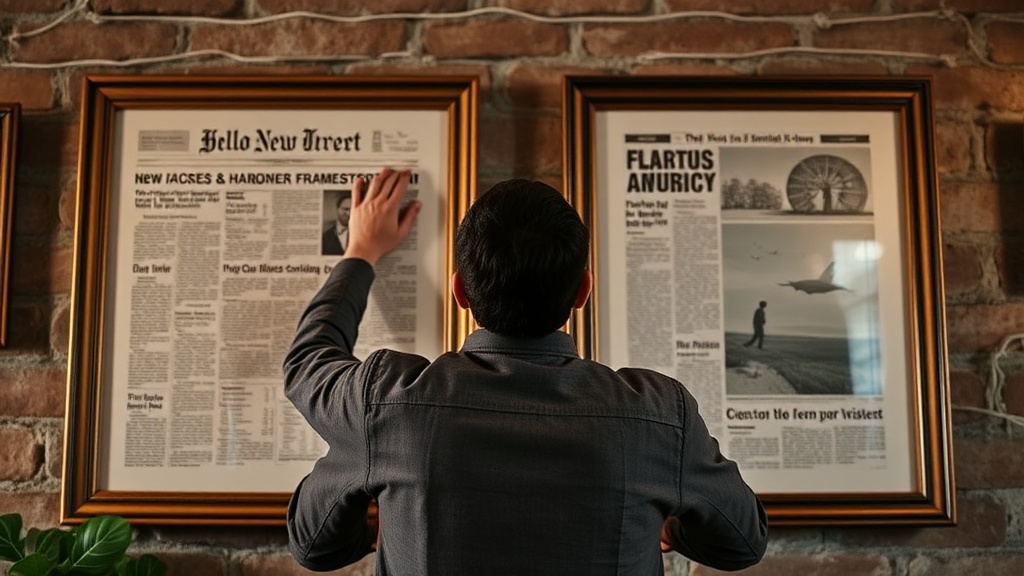
Mounting Your Vintage Newsprint in Frames

A single sheet of newsprint from 1920 contains high levels of lignin, a natural organic polymer that turns paper yellow and brittle when exposed to light and oxygen. If you frame a vintage newspaper incorrectly, you aren't just displaying art—you're accelerating its decay. This guide covers the specific materials, mounting techniques, and framing mistakes you need to avoid to ensure your collection survives the decades. We'll look at why standard cheap frames are the enemy of paper and how to build a protective environment for your newsprint.
What Materials Should I Use for Newspaper Framing?
You must use acid-free, archival-quality materials that are specifically labeled as "pH neutral" or "acid-free" to prevent the paper from yellowing and crumbling.Archival Methods or specialized art supply stores.
The most important component is the matting. Most people think a mat is just for aesthetics, but in the world of paper preservation, it's a structural barrier. A mat creates a physical gap between the glass and the newsprint. Without this gap, the paper can stick to the glass due to humidity—a disaster for any collector.
When selecting your components, keep these three rules in mind:
- The Glass: Always choose UV-protective glass or acrylic. Standard glass does nothing to stop the UV rays that bleach ink and destroy fibers.
- The Backing: Use acid-free foam core or museum-grade mounting board.
- The Adhesive: Never use tape or glue directly on the newsprint. Use archival-grade-hinges or linen tape instead.
It’s a bit of an investment upfront. But honestly, a beautiful 1940s front page isn't worth much if it's a pile of gray dust in five years because you used a $10 frame from a big-box retailer. (I've seen it happen too many times in my own collection.)
How Do I Mount Newsprint Without Damaging It?
The safest way to mount vintage newsprint is using the "hinge method" with archival linen tape and a small amount of wheat starch paste or pH-neutral adhesive.
You shouldn't glue the entire sheet down. If you do, the paper becomes a permanent part of the frame, and you'll never be able to remove it without tearing the fibers. Instead, we use hinges. This allows the paper to "breathe" and move slightly with changes in temperature and humidity. It also makes it much easier to remove the paper later if you decide to sell it or move it to a different frame.
Here is the step-up process for a professional mount:
- Clean the area: Ensure your workspace is dust-free. Even a tiny bit of grit can scratch the newsprint during the mounting process.
- Prepare the hinges: Cut small strips of archival linen tape.
- Apply the adhesive: Apply a tiny amount of adhesive to the ends of the tape—not the paper itself.
- Attach to backing: Secure the tape to the back of the newsprint, then press it onto your acid-free mounting board.
- Check the alignment: Ensure the paper is centered before the adhesive sets completely.
If you're feeling nervous about the physics of paper, you can read more about paper preservation techniques on Wikipedia to understand how moisture affects cellulose fibers. It's a deep rabbit hole, but worth the time.
One thing to watch out for: Never use "pressure mounting." This is where the glass is pressed directly against the paper. It looks flat and neat, but it's a death sentence for old newsprint. The moisture trapped between the glass and the paper will cause mold and permanent staining.
Is UV Protection Really Necessary for Newspaper?
Yes, UV-protective glass or acrylic is absolutely necessary because ultraviolet light triggers a chemical reaction called photodegradation, which breaks down the molecular bonds in the paper.
You might think, "It's just sitting on my wall, it's not in a museum." But even indirect sunlight through a window is enough to bleach the ink of a vintage 1910 broadsheet. The ink on old newspapers is often carbon-based or early synthetic dyes, both of which are highly sensitive to light. Without UV protection, your black ink will turn a ghostly gray, and your newsprint will turn a deep, unattractive brown.
Let's compare the common options so you can decide which fits your budget and needs:
| Material Type | UV Protection Level | Pros | Cons |
|---|---|---|---|
| Standard Glass | Minimal | Cheap and easy to find. | Will cause yellowing and ink fade. |
| UV-Filtering Glass | High | Excellent clarity; prevents much damage. | Heavy and more expensive. |
| Acrylic (Plexiglass) | Very High | Lightweight; virtually unbreakable. | Can scratch easily; static issues. |
If you're displaying a piece that is particularly fragile or historically significant, I'd lean toward the acrylic. It's lighter, which is great if you're hanging it in a high-traffic area, and the UV protection is usually more consistent. Just be careful with static—it can pull tiny bits of loose paper toward the surface.
The catch? High-end UV glass can be quite heavy. If you're using a thick piece of museum glass, make sure your wall mounting hardware is up to the task. I've seen people hang beautiful-looking frames only to have them slip because they underestimated the weight of the glass.
Before you start framing, make sure you've mastered the basics of handling. If you haven't yet, check out my guide on how to properly store and preserve your collection. Framing is just one part of the long-term care process. If the storage environment is bad, the frame won't save the paper from the elements.
One last tip: always use a clean, dry surface. Even the oils from your fingertips can leave a permanent mark on old newsprint. I always wear white cotton gloves when handling my most prized pieces. It feels a bit dramatic, but it works.
Steps
- 1
Select Acid-Free Materials
- 2
Secure the Newsprint with Archival Corners
- 3
Use UV-Protective Glass