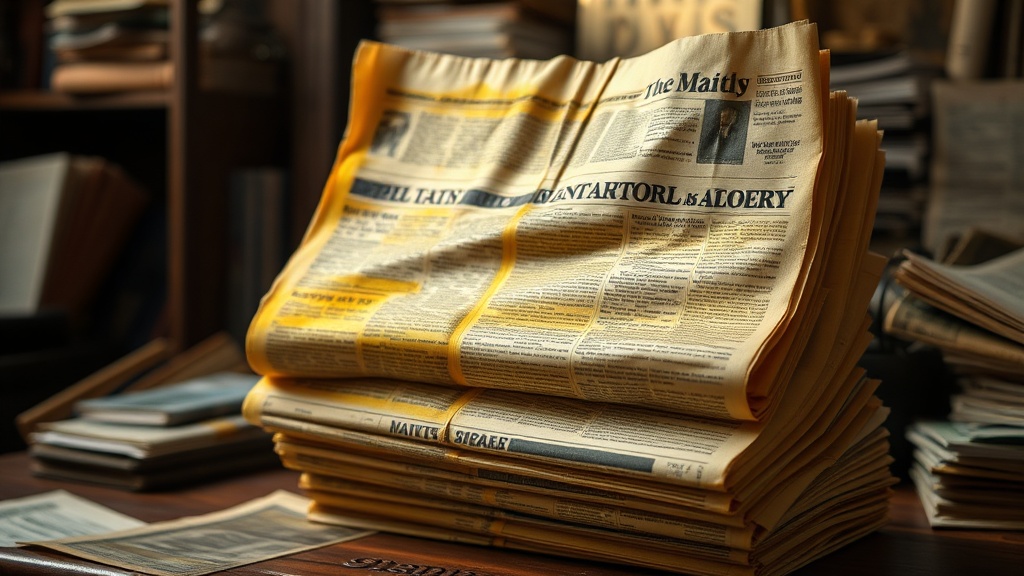
Why Your Old Newspapers Are Yellowing (And How to Stop It)

Quick Tip
Store newspapers flat in acid-free folders away from light, heat, and humidity to dramatically slow the yellowing process.
Why Do Old Newspapers Turn Yellow Over Time?
Newspapers yellow because of lignin — a natural polymer in wood pulp that reacts with oxygen and sunlight. The lignin contains chromophores (light-absorbing compounds) that oxidize and produce that familiar brownish tint. Modern newspapers still contain lignin — cheaper paper means more of it. Acidic compounds accelerate the breakdown. Heat speeds things up too. Your collection isn't doomed — understanding the chemistry helps you fight back.
What's the Best Way to Store Newspapers to Prevent Yellowing?
Cool, dark, dry conditions are your best defense. Aim for 65°F (18°C) and 35% relative humidity. Basements and attics? Terrible choices — temperature swings kill paper. Instead, consider a closet on an interior wall away from exterior heat and moisture. The Library of Congress recommends storing paper-based materials in stable environments to maximize longevity.
Here's the thing: light exposure is cumulative. Even brief periods under fluorescent bulbs add up. Newspapers left on windowsills for display purposes — they're sacrificing years of life. UV-blocking glass helps, but darkness remains the gold standard.
Storage Materials That Actually Work
- Archival polyester sleeves (Mylar D by Gaylord Archival) — crystal clear, chemically stable
- Acid-free folders — pH-neutral, buffered to neutralize incoming acids
- Archival boxes — lignin-free, calcium carbonate buffered
- Avoid: Regular plastic bags, rubber bands, and standard file folders — these trap acids and off-gas chemicals
Can You Reverse Yellowing on Old Newspapers?
Most yellowing is permanent. That said, professional paper conservators can perform deacidification sprays and washing treatments — but these cost hundreds of dollars per item and carry risk. For the average collector? Prevention beats restoration every time.
| Method | Cost | Effectiveness | Risk Level |
|---|---|---|---|
| Proper storage | $20-50 | Prevents future damage | None |
| Archival sleeves | $15-30 per 100 | Blocks acids, protects surface | Minimal |
| Professional deacidification | $150-400+ | May halt deterioration | Moderate |
| DIY "restoration" (bleaching, ironing) | $5-20 | Damages paper irreversibly | High — don't do this |
Worth noting: newspapers printed before 1850 — made from cotton rag — age better than wood-pulp papers from the 20th century. If you own Civil War-era issues, you're already ahead of the game. Handle them with clean cotton gloves (Nitrile works too — from Light Impressions) and support the entire page when moving.
Your collection tells stories. Protecting it doesn't require a climate-controlled vault — just consistency, quality materials, and respecting what these fragile artifacts need to survive another century.