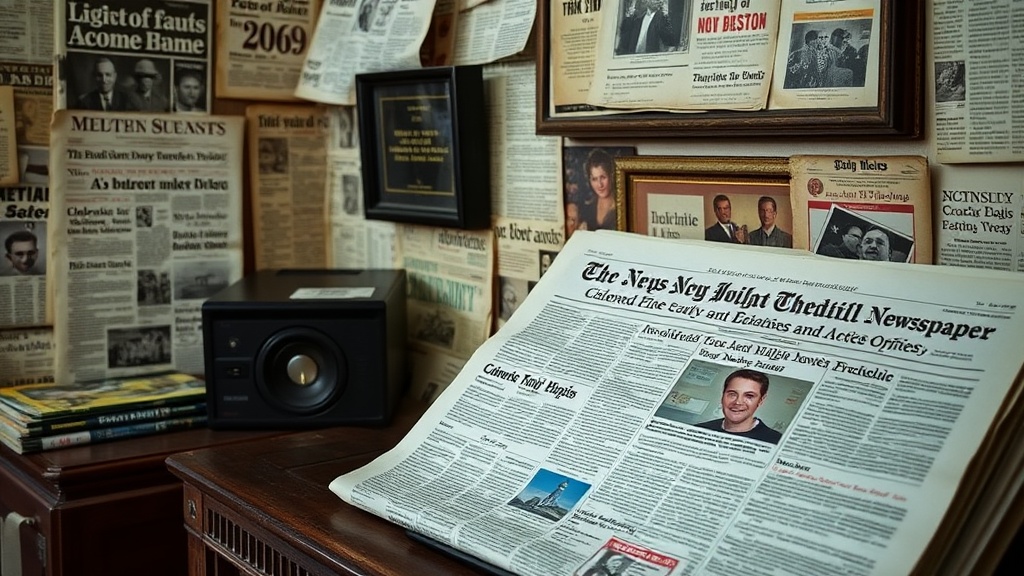
The Art of Collecting Vintage Newspapers: A Journey Through History

This guide covers everything needed to start or grow a vintage newspaper collection — from identifying valuable issues and understanding condition grading to proper storage techniques and where to buy. Whether hunting for a specific historical headline or building a thematic collection around a particular era, readers will find practical strategies for acquiring, preserving, and displaying these fragile pieces of history.
What Makes a Vintage Newspaper Worth Collecting?
Not every old newspaper holds value — age alone doesn't guarantee worth. Collectors seek papers with historical significance, famous headlines, limited print runs, or unusual formats. The New York Times from July 21, 1969, covering the moon landing commands premium prices. Same with USA Today announcing 9/11 — surprisingly valuable despite being a modern publication.
Regional newspapers often tell better stories than national dailies. A small-town paper from December 7, 1941, describing local reactions to Pearl Harbor can outshine a generic Chicago Tribune from the same week. The charm lies in the unexpected — advertisements for products long extinct, society columns documenting forgotten customs, editorials reflecting viewpoints that now seem alien.
Worth noting: completeness matters. A single front page without the rest of the issue cuts value dramatically. Collectors want whole papers — front page through back, including inserts and supplements. Missing sections? That's a problem. Water damage, mold, or aggressive foxing? Even worse.
How Do You Grade the Condition of Old Newspapers?
Condition grading follows established standards similar to comic book collecting, with modifications for paper's unique fragility. Professional graders evaluate four main factors: structural integrity, paper quality, content completeness, and visual presentation.
Here's the thing about newspaper paper — it's inherently cheap. Publishers used wood pulp with high lignin content, which yellows and crumbles over time. Even "mint" condition vintage newspapers show some aging. The goal isn't perfection; it's preserving what's there.
| Grade | Description | Market Impact |
|---|---|---|
| Gem Mint | Original freshness, no fading, crisp edges, no tears | Premium pricing (200%+ of guide) |
| Near Mint | Minor imperfections only, excellent color retention | Above guide value (150-200%) |
| Very Fine | Light aging signs, small tears possibly mended | Guide value to 150% |
| Fine | Moderate wear, some yellowing, possible edge chips | 70-100% of guide |
| Good | Significant aging, tears, staining, but complete | 40-70% of guide |
| Poor | Heavy damage, missing pieces, fragile handling | 10-40% of guide (if sellable) |
The catch? Grading is subjective. One dealer's "Fine" might be another's "Very Fine." Always examine photos closely when buying online. Ask questions. Request additional images of problem areas — fold lines, mastheads, datelines. Reputable sellers (like eBay established vendors or HistoricPages.com) typically welcome scrutiny.
Where Should You Buy Vintage Newspapers?
Sources range from estate sales and antique shops to specialized dealers and online marketplaces. Each offers different advantages — and risks. Local estate sales often yield the best prices for bulk purchases, while established dealers provide authenticity guarantees and graded specimens.
Online platforms have transformed the market. eBay hosts thousands of vintage newspaper listings daily, from $5 curiosity pieces to $5,000 rarities. The eBay vintage newspaper category offers buyer protection — but requires vigilance against reproductions and misrepresented items. Amazon's collectibles marketplace carries fewer options, typically at higher prices but with more standardized seller ratings.
Specialized dealers like Timothy Hughes Rare & Early Newspapers provide authenticated, graded inventory with detailed provenance. Prices run higher than general marketplaces, but the expertise and guarantee of authenticity justifies the premium for serious collectors. Similarly, the American Antiquarian Society maintains resources for locating reputable dealers — though they don't sell directly.
That said, don't overlook unconventional sources. Libraries deaccession duplicate holdings. Historical societies occasionally sell donations. Even Craigslist turns up collection liquidations from heirs who've inherited boxes of old papers and want them gone. Patience pays.
How Do You Store and Preserve Newspaper Collections?
Proper storage prevents the rapid deterioration that destroys unprotected papers within decades. The enemies are light, humidity, temperature fluctuations, and acidic materials. Archive-quality supplies aren't optional — they're the difference between a collection that lasts generations and one that turns to dust.
Start with materials. Standard cardboard boxes and file folders contain acids that accelerate yellowing. Instead, invest in:
- Acid-free storage boxes — lignin-free, pH-neutral containers from suppliers like Gaylord Archival or University Products
- Polyester sleeves — Mylar D (Type I polyester) for individual issue protection, never PVC
- Unbuffered tissue paper — for interleaving between pages when flattening is needed
- Microclimate framing — for display pieces, using UV-filtering glass and acid-free mats
Environmental control matters enormously. Ideal conditions: 65°F temperature, 35% relative humidity, minimal light exposure. Basements flood. Attics cook. Bedrooms fluctuate. A dedicated closet with climate stability beats trendy display options that damage the collection.
Handling technique prevents accidental damage. Clean hands — washed, no lotion. Support the entire paper when moving it, never grabbing corners. Flatten folded papers gradually under weight before storage (rushing this causes splits along fold lines). And absolutely no laminating — that plastic coating traps moisture and destroys the paper beneath.
Display Options That Don't Destroy Value
Collectors often want to show their treasures. The key is reversibility — any display method should allow returning the paper to dark storage undamaged. Professional framing with UV-protective glass (not plastic) works for single showcase pieces. Rotate displayed items every few months to limit light exposure.
Digital alternatives protect originals while still sharing the collection. High-resolution scans capture every detail for online display. The Library of Congress's Chronicling America project demonstrates what's possible — millions of newspaper pages freely accessible without risking physical artifacts. Consider scanning your collection for insurance documentation and personal reference.
What Are the Most Sought-After Issues for Collectors?
Certain dates and events drive consistent demand. Revolutionary War-era papers (Pennsylvania Packet, Rivington's New York Gazetteer) command thousands. Civil War battle reports published within days of engagement carry premiums. World War II headline editions — Pearl Harbor, D-Day, V-J Day — remain perennial favorites.
Here's what experienced collectors watch for:
- First reports of major events — the earlier the edition, the higher the value. Extra editions trump regular daily runs.
- Complete runs of significant publications — every issue of The Liberator (anti-slavery newspaper) or The Revolution (Susan B. Anthony's suffrage paper)
- Regional variations of national stories — how did the Dallas Morning News cover JFK's assassination compared to the Boston Globe?
- Special supplements and illustrated editions — color sections, panoramic photographs, artist renderings
- Advertising-rich editions — some collectors specialize in product advertisements, building thematic collections around vintage brands
The market fluctuates. Twenty years ago, sports sections were overlooked; now collectors pay premiums for early Muhammad Ali or Babe Ruth coverage. Similarly, entertainment sections featuring Elvis Presley or The Beatles have appreciated significantly. What's undervalued today might be tomorrow's hot commodity.
Building a Collection on a Budget
Not everyone starts with deep pockets. Budget-conscious collectors can still build impressive holdings through strategic focus and patience. The key is specialization rather than scattershot acquisition.
Consider thematic collecting. Instead of chasing every historic headline, focus on one area: advertisements from the 1920s, Civil War coverage from Ohio newspapers, or baseball reporting from 1900-1910. Narrow focus allows deeper expertise — and better deals when you recognize value others miss.
Local history offers another angle. Your hometown's newspapers from the early 20th century probably sell cheap locally, even if they'd command higher prices elsewhere. Estate sales in small towns routinely offer boxes of regional papers for nominal sums. Dealers in New York or Chicago won't make the trip for a $50 purchase — but you can.
Building relationships with antique dealers, estate sale organizers, and other collectors creates opportunities before items hit the open market. Many collectors sell duplicates or trade within trusted networks. Join organizations like the Ephemera Society of America for access to specialized knowledge and fellow enthusiasts who might become trading partners.
Start small. A single well-preserved issue beats a box of damaged papers. Learn to evaluate condition before building volume. Read reference books — "Collecting Old Newspapers" by Richard Veit provides excellent guidance for beginners. Attend auctions — even if you don't bid, watching sales teaches market dynamics.
"The best collectors aren't the ones with the biggest budgets. They're the ones who know exactly what they're looking at — and what it's really worth." — Timothy Hughes, rare newspaper dealer
Vintage newspaper collecting connects you directly to history's first draft. Holding a paper from D-Day, feeling the texture of newsprint that someone's grandfather read over morning coffee — that's something digital archives can't replicate. Start carefully, store properly, and build a collection that outlasts your own headline.