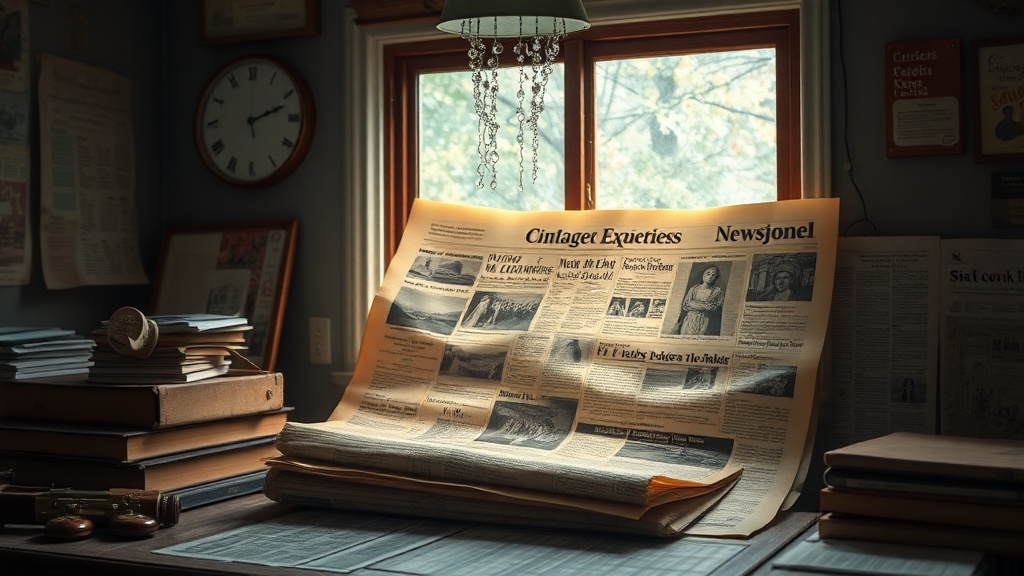
Protecting Your Vintage Newsprint from Light and Humidity

You'll learn the specific physical methods used to prevent paper degradation, how to manage environmental variables in a home setting, and which display materials are actually safe for sensitive newsprint. Protecting a collection isn't just about keeping things in a box; it's about understanding the chemistry of decay so you can stop it before it starts.
Collecting old newspapers is a bit of a race against time. Unlike hardbound books or heavy periodicals, newsprint is notoriously fragile because of its high acid content. If you've ever picked up a paper from the 1940s and felt it crumble slightly under your fingers, you've experienced the reality of acid-driven decay. This isn't just an aesthetic issue—it's a structural one. Once the fibers break down, the history contained within them literally turns to dust.
Can I Display Vintage Newspapers in a Frame?
The short answer is yes, but you can't just grab a cheap frame from a big-box store and call it a day. Standard frames often use acidic wood or cheap cardboard backings that will accelerate the yellowing process. If you want to frame a piece, you must look for terms like "acid-free" or "archival quality." This applies to the matting and the backing board as well.
UV light is the silent killer of vintage paper. Even if you aren't using direct sunlight, the ambient light in a room can bleach the ink and turn the paper brittle. If you're determined to hang a piece on the wall, use UV-protective glass or acrylic. It's a small investment that keeps a piece looking decent for years longer. I've seen many collectors make the mistake of hanging a beautiful 1920s front page right next to a window—it's a heartbreaking way to lose a find.
"The preservation of paper is largely a matter of controlling the environment to prevent the natural chemical breakdown of cellulose fibers." — This is a standard principle in archival science.
When choosing a frame, avoid anything with metal fasteners that might touch the paper directly. Instead, use archival-grade mounting corners. This keeps the paper suspended and prevents the physical pressure of the frame from causing cracks or tears. It's a subtle distinction, but it makes a massive difference in the long run.
How Do I Store Newsprint Without Damaging It?
If you aren't framing a piece, your best bet is flat storage. Stacking newspapers vertically in a box is a recipe for disaster because the weight of the top papers can crush the delicate fibers of the bottom ones. Instead, store them horizontally in acid-free archival boxes. These boxes are designed to buffer the paper against environmental shifts.
Humidity is your second biggest enemy. Too much moisture leads to mold and foxing (those little brown spots you see on old documents), while too little can make the paper so brittle that it snaps when you try to turn a page. A stable environment is the goal. Most collectors find that a consistent indoor temperature—around 65 to 70 degrees Fahrenheit—is the sweet spot for long-term storage.
Avoid using plastic sleeves that aren't specifically labeled as archival. Many cheap plastic sleeves trap moisture and gases, which can actually accelerate the decay of the paper. If you must use a sleeve for protection, look for those made from inert materials like polyester (Mylar). You can find much better information on material safety through the Library of Congress archives, which provides extensive guidance on how historical documents are handled professionally.
What Are the Best Materials for Organizing a Collection?
Organization should never come at the expense of the paper's health. When you're sorting through a new batch of finds, don't use rubber bands or metal paperclips. These will leave permanent marks and can even eat through the paper over time. Instead, use acid-free folders or even simple linen bags if you're storing larger bundles.
If you're looking for professional-grade supplies, you'll want to look for products that meet the ISO standards for permanence. A good rule of thumb is to avoid anything that has a strong chemical scent. If a storage container smells like a factory, it's probably not going to be kind to your 1950s sports section. For those interested in the technical side of paper chemistry, the Library of Congress preservation guides are an incredible resource for understanding how to manage different types of paper-based artifacts.
A well-organized collection is a protected collection. Whether you're keeping things in a drawer or on a shelf, the goal is to minimize the number of times the paper is handled. Every time you move a sheet, you risk a tear or a wayward fingerprint. Oils from your skin can also leave marks that become visible as the paper ages, so washing your hands before a deep-dive session into your archives is a simple but vital habit.
| Storage Method | Pros | Cons |
|---|---|---|
| Archival Box | Excellent protection, stackable | Takes up more space |
| UV-Protective Frame | Looks great, displayable | Expensive, risk of light damage |
| Acid-Free Folder | Easy to sort, low cost | Minimal protection from humidity |
Ultimately, the way you treat your collection dictates how much of it survives. It's easy to get carried away with the thrill of the hunt, but the real work happens in the quiet moments of maintenance. A collection is a living thing, in a way—it's constantly reacting to the world around it. By being proactive, you ensure that these pieces of history remain readable and intact for the next generation of enthusiasts.